
AI Lab Drama & The Agentic Shift: SMB Weekly Roundup
If you run a small or mid-sized business, keeping up with the daily “AI lab soap opera” probably feels like a distraction. One day a model gets banned, the next day a new 1.5-trillion-parameter giant launches, and a tech giant’s stock swings by a quarter of a trillion dollars. It is easy to write this off as Silicon Valley theater.
But behind the headlines, these announcements are redrawing the map for how your business will operate over the next 12 to 24 months. These models are not just chat boxes anymore—they are the underlying operating systems for the custom agents running your scheduling, customer service, and lead tracking pipelines. When a model shuts down or a key API gets throttled, it impacts your actual business operations.
Yesterday and today, we saw an unprecedented flurry of activity from every major AI lab: xAI launched a massive beta, Anthropic stabilized its global deployment after intense regulatory pressure, Alphabet took a heavy hit over product delays, and Google quiet-dropped a model that makes image generation almost free. Here is a breakdown of what actually happened, and exactly what it means for your business strategy.
1. xAI Grok 4.5 Beta: The Parameter Arms Race Hits 1.5 Trillion
Elon Musk’s xAI officially launched the beta of Grok 4.5, built on their new v9 architecture. Sporting an astronomical 1.5 trillion parameters, this model is designed for deep analytical reasoning and advanced multi-step coding execution.
For small businesses, parameter counts are mostly vanity metrics. What actually matters is reasoning density. A larger model is better at understanding complex business rules, reading extensive client histories, and executing code without “hallucinating.” However, larger models also require immense computing power, which translates to higher API costs and slightly slower response times.
The SMB Takeaway: Do not rush to swap your lightweight customer-facing agents to Grok 4.5. High-parameter models are best used in the background as “controllers” or “strategists” that review your data overnight, while faster, cheaper models handle the real-time customer interactions. Knowing how to find the best AI model for the job is critical to keeping your software bills manageable.
2. Anthropic’s Regulatory Rollercoaster: Mythos 5 and Fable 5 Return
Over the last 48 hours, Anthropic has executed a massive recovery following a series of government-mandated shutdowns. On June 29, the U.S. government partially lifted export controls, granting “partial relief” to Claude Mythos 5 so it can be deployed by critical infrastructure defenders. Following this, Anthropic announced that Fable 5 has officially returned to global availability as of July 1.
To prevent future abrupt shutdowns, Anthropic—alongside Amazon, Microsoft, Google, and Glasswing—has proposed a new, industry-wide Jailbreak Severity Scoring Framework. This is designed to standardize how frontier models are evaluated for safety before governments step in with heavy-handed export blocks.
The SMB Takeaway: If your entire customer service pipeline depends on a single model (like Claude 3.5), a sudden regulatory shutdown can pause your business instantly. This is why we build multi-model architectures for our clients. If your primary cloud model experiences a outage or is blocked, your system must automatically route traffic to a backup. When cloud-based systems experience disruptions, having a local fallback like Ollama and Qwen configured on your local hardware is the ultimate business insurance policy.
3. Alphabet’s $269 Billion Hit and Sergey Brin’s Leaked Memo
Alphabet (Google’s parent company) faced a brutal market correction this week, losing $269 billion in market cap after failing to ship Gemini 3.5 Pro by their self-imposed month-end deadline. The delay sent shockwaves through the industry, leading to a highly urgent internal memo from co-founder Sergey Brin leaked to the press.
Brin’s memo didn’t focus on parameter size or chatbot features. Instead, he wrote: “To win the final sprint, we must urgently bridge the gap in agentic execution and turn our models into primary developers of final code.”
This is a massive confirmation of what we have been building at SquidCircle. The future of AI is not “conversational search” or nicer chat interfaces. It is agentic execution—systems that can write code, connect different software platforms, and perform multi-step jobs without human intervention. Tech giants are no longer trying to build better assistants; they are trying to build autonomous software engineers.
The SMB Takeaway: When a company as massive as Google prioritizes agentic execution, it is a signal that manual digital operations are becoming obsolete. If you are still manually copying data from emails to spreadsheets, you are operating at a massive competitive disadvantage. This shift is also changing the developer landscape—which is exactly why we saw SpaceX purchase Cursor AI to secure their own pipeline of autonomous coding infrastructure.
4. OpenAI Restricted Deployment: Government Guardrails Tighten
Following the safety alarms triggered by Fable 5, OpenAI has restricted public access to several of its newest experimental reasoning deployments “at the request of the U.S. government.” Access is currently limited to a tiny group of vetted, trusted partners under strict compliance monitoring.
As governments treat advanced AI as national security assets, access to the most powerful models will increasingly be gatekept. Small businesses will not be able to simply sign up with a credit card to access the most advanced frontier reasoning systems.
The SMB Takeaway: Because of these tight constraints, the concept of “infinite context windows” on giant cloud models is hitting a physical and regulatory wall. Local data compression and efficient architectures are the only way forward. For a deep dive into how businesses are solving this constraint on-premise, read our newly published piece on The Context Window Wall and why local agents need hybrid auto-compaction to run smoothly.
5. Nano Banana 2 Lite: Professional Image Generation for Fractions of a Cent
While the market was focused on Alphabet’s market cap, Google quietly dropped a revolutionary tool for marketers: Nano Banana 2 Lite (accessed via the API as gemini-3.1-flash-lite-image). It replaces the original Nano Banana model, delivering incredibly fast 4-second text-to-image generations with built-in SynthID watermarking.
The real shock is the pricing: **$0.034 per 1,000 standard images**, and **$0.017 per 1,000 batch images**. For comparison, running a high-volume product mockup or ad creative variant campaign using older models would cost hundreds of dollars. Google has effectively commoditized high-quality image generation, making it virtually free.
The SMB Takeaway: If you are still paying stock photo subscriptions or spending hours finding generic graphics for your social media channels, you can stop. With models like Nano Banana 2 Lite, you can build custom, automated creative pipelines that generate hundreds of brand-aligned ad variants for pennies. It is the ultimate small business hack for marketing scale.
Building a Resilient AI Strategy for Your Business
The lessons from this week’s AI lab updates are clear. A successful small business AI strategy cannot rely on a single vendor, a single model, or a simple chatbot. It requires a resilient, multi-model approach that focuses on actual task execution rather than fancy chat interfaces. By keeping your data local, setting up fallback systems, and leveraging cheap, specialized APIs, you can build an automated operations team that survives any Silicon Valley disruption.
At SquidCircle, we specialize in building custom, operator-owned AI teams that are resilient, vendor-independent, and focused on real-world business results. If you are ready to stop chasing tools and start building real automation, let’s talk.
OpenAI’s GPT-5.6: Sol, Terra, and Luna
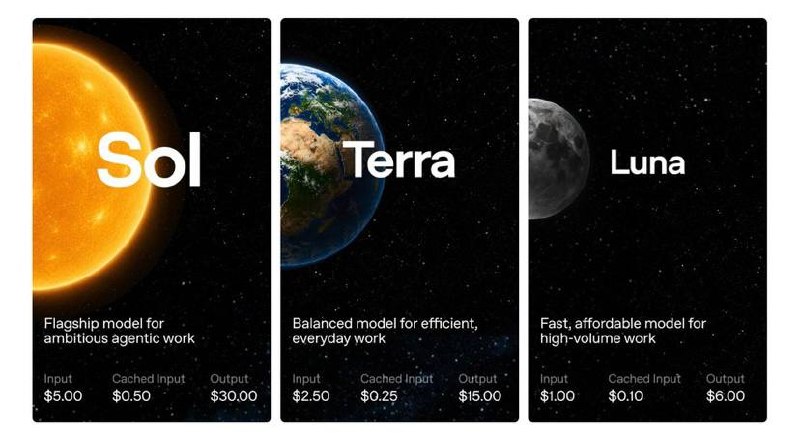
OpenAI didn’t just sit this one out. On June 26, they previewed GPT-5.6 — a three-tier model family that replaces the old single-model approach:
- Sol — the flagship. $5/$30 per 1M tokens (input/output). Same price as GPT-5.5, but with a new “ultra mode” that fans work across subagents for complex reasoning. Sets a new state of the art on coding and cybersecurity benchmarks.
- Terra — the workhorse. $2.50/$15 per 1M tokens. GPT-5.5-class performance at half the price. This is the one most businesses will default to.
- Luna — the budget option. $1/$6 per 1M tokens. Fast, cheap, and still strong enough for high-volume work where you don’t need deep reasoning.
Here’s what the pricing card looks like side by side:
The catch? It’s still in restricted preview. OpenAI is coordinating with the U.S. government on access, starting with about 20 trusted partners. General availability is “coming weeks” — but the pricing and capability tiers are locked in.
The Real Story: AI Image Generation Got Stupid Cheap
While the labs fight over language model supremacy, Google quietly dropped something that matters even more for day-to-day business operations: Nano Banana 2 Lite.
Released June 30, it’s Google’s fastest and cheapest image generation model yet. About 4 seconds per image at roughly 3 cents per image (or under 2 cents with batch pricing).
We ran the exact same prompt across three models so you can see the difference:
Prompt: “A modern minimalist office desk at golden hour sunset. A sleek silver laptop is open, screen glowing with a colorful analytics dashboard showing growth charts. A steaming cup of black coffee sits beside it on a bamboo coaster. Warm golden sunlight streams through a large floor-to-ceiling window behind the desk, casting long soft shadows. A small potted succulent plant is in the corner of the desk. The desk is light oak wood. Professional product photography, shallow depth of field, cinematic warm tones, ultra realistic, high detail.”



For most business use cases — blog thumbnails, social media graphics, ad variants, product mockups — the Lite model is more than good enough. At 3 cents per image, generating 60 images a month costs about $2. Compare that to a stock photo subscription at $30-50/month or a freelance designer at $300-600/month.
The lesson? Image generation isn’t a luxury anymore. It’s a utility. The question isn’t whether you can afford it — it’s whether you’re using it enough.