AI Agents for Marketing Intake & Request Triage: The 2026 Guide for Small Businesses
Quick Summary
AI agents for marketing intake and request triage are replacing the messy mix of contact forms, inbox forwarding, and sticky-note handoffs that most small businesses still rely on. Instead of a form submission sitting in an inbox for hours, an AI agent reads it instantly, categorizes the request, routes it to the right person, and responds to the sender — all within seconds. For businesses getting dozens of inquiries a week across email, web forms, and social DMs, this is the difference between converting a lead and losing one.
What Changed in AI Marketing Intake in 2026
Two years ago, “AI intake” meant a chatbot widget that asked pre-set questions and emailed you the transcript. That was barely better than a contact form.
In 2026, three shifts changed the game:
- Agents can now read and understand context. When someone submits a request like “I need a new roof after last week’s storm — insurance claim,” a modern AI agent understands urgency, service type, and intent — not just keywords. It can prioritize that lead over a generic “how much do you charge” inquiry.
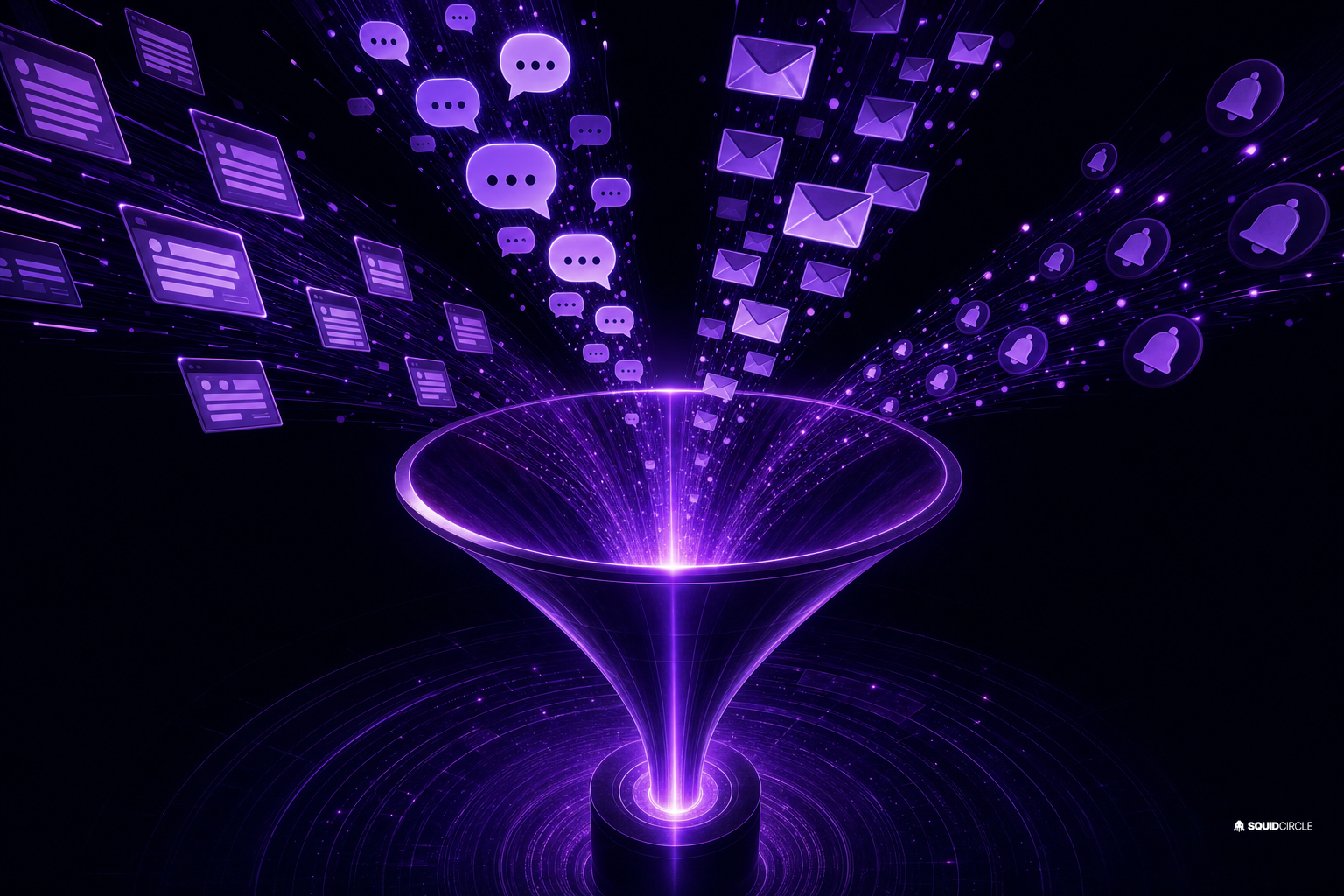
- Multi-channel intake is unified. Instead of separately monitoring email, web forms, Instagram DMs, and Facebook messages, a single AI agent watches all channels and triages everything in one place. No more “I saw your email but missed your Instagram message.”
- Agents take action, not just notes. Today’s AI agents don’t just log requests — they can book appointments, send follow-up emails, assign tasks to team members, and update your CRM automatically. We’ve seen this firsthand with our zero-touch client onboarding system that handles intake without human intervention.
The broader shift toward AI business workflow automation means these intake agents aren’t experimental — they’re becoming the default for businesses that want to compete on response speed.
Why It Matters
The numbers are stark. According to a Harvard Business Review study, businesses that respond to leads within five minutes are 21 times more likely to qualify them than those that take 30 minutes or more.
Most small businesses don’t respond in five minutes. They respond in hours — or days. Not because they don’t care, but because intake is manual:
- A form submission lands in a shared inbox.
- Someone checks email when they get a chance.
- They forward it to the right person.
- That person reads it and decides what to do.
- Eventually, someone replies.
Every step is a delay. AI agents collapse that to near-zero. We explored this in our deep dive on speed-to-lead and inbox triage automation, where we cut response times from hours to seconds.
The impact compounds: faster responses lead to higher conversion rates, which means more revenue from the same marketing spend — without hiring more staff.
How Small Businesses Can Use It
Here’s what a modern AI marketing intake system actually looks like for a small business:
1. Smart Form Processing
When a prospect fills out a contact form, the AI agent parses the submission, extracts key details (name, service needed, urgency, budget signals), and logs it in your CRM. No manual data entry. If you’ve ever done CRM cleanup after months of messy intake, you know how valuable clean data is from the start.
2. Instant Qualification and Routing
The agent scores each lead based on criteria you define: Is this a high-value service request? A tire-kicker? A spam submission? Hot leads get flagged and routed immediately. Low-priority messages get a polite auto-response. This mirrors what we describe in our guide to automating lead follow-up with AI — but applied to the intake side, not just the follow-up side.
3. Multi-Channel Capture
Email, web forms, social media DMs, phone call transcripts — all funnel into one triage queue. The agent tags each by source and channels them into the same workflow. This is especially valuable for owner-operated businesses where one person is juggling every incoming channel.
4. Auto-Response and Booking
For qualified leads, the agent sends a personalized response immediately — not a generic “we’ll get back to you” — and can even offer appointment booking. Pair it with an AI appointment booking assistant and the lead goes from inquiry to scheduled consult without a human touching anything.
5. Analytics and Optimization
Because every intake is logged and categorized, you get real data on what’s coming in: which services get the most inquiries, which channels produce the best leads, where the gaps are. That’s intelligence most small businesses have never had access to.
SquidCircle Perspective
At SquidCircle, we’ve been running AI intake agents for our own business and for clients for months. The setup that works:
- A single AI agent monitors all intake channels (email, forms, social).
- It triages by intent: new business, support request, existing client, spam.
- It acts immediately: responds, books, or routes — no waiting for a human to check inbox.
- It logs everything to the CRM with structured data, so nothing falls through the cracks.
This isn’t a future vision — it’s what we’re deploying today. Our SquidLab projects include intake automation builds for home service businesses, clinics, and professional services firms. And unlike the AI sales automation posts we’ve published (which focus on outbound selling), this is purely about inbound: handling what walks through the door faster and smarter.
FAQ
What’s the difference between AI marketing intake and a chatbot?
A traditional chatbot follows a script — “Press 1 for sales, Press 2 for support.” An AI intake agent understands natural language, extracts meaning from unstructured messages, and takes real actions (booking, routing, CRM updates) rather than just displaying pre-written responses.
Do I need to replace my existing contact form?
No. AI intake agents work with your existing forms. The agent processes submissions after they come in — you keep your form, you just add intelligence on the backend.
How much does it cost to set up?
For most small businesses, an AI intake agent costs less than a part-time hire and runs 24/7. Exact pricing depends on your volume and channels, but the ROI from improved response times and conversion rates typically pays for itself within the first month. See our breakdown of AI receptionist cost vs ROI for comparable numbers.
Will it feel impersonal to my leads?
Only if you let it send generic responses. Modern AI agents write personalized replies that reference the specific details in each inquiry. The key is treating the agent’s response as a first touch — warm, specific, helpful — not a form letter.
Can it handle complex requests that need a human?
Yes — that’s the triage part. The agent handles the routine 70-80% automatically and escalates the complex 20-30% to a human with full context attached. No more starting from scratch when you pick up a conversation.
Conclusion
Marketing intake is the front door of your business. If leads are sitting in an inbox, getting slow responses, or falling through the cracks between channels, you’re losing revenue you already earned. AI agents for marketing intake and request triage fix that — not by adding another tool to manage, but by making sure every inquiry gets an instant, intelligent, appropriate response.
The businesses winning in 2026 aren’t the ones with the biggest ad budgets. They’re the ones that convert more of what comes in. An AI intake agent is how you do that.
Ready to stop losing leads to slow intake? SquidBot deploys AI intake agents that handle form submissions, triage requests, and book appointments — 24/7. Or join our community to see how other small businesses are using AI to grow.