82% of Small Businesses Now Use AI: SMB Guide
The Question Changed, and Almost Nobody Noticed
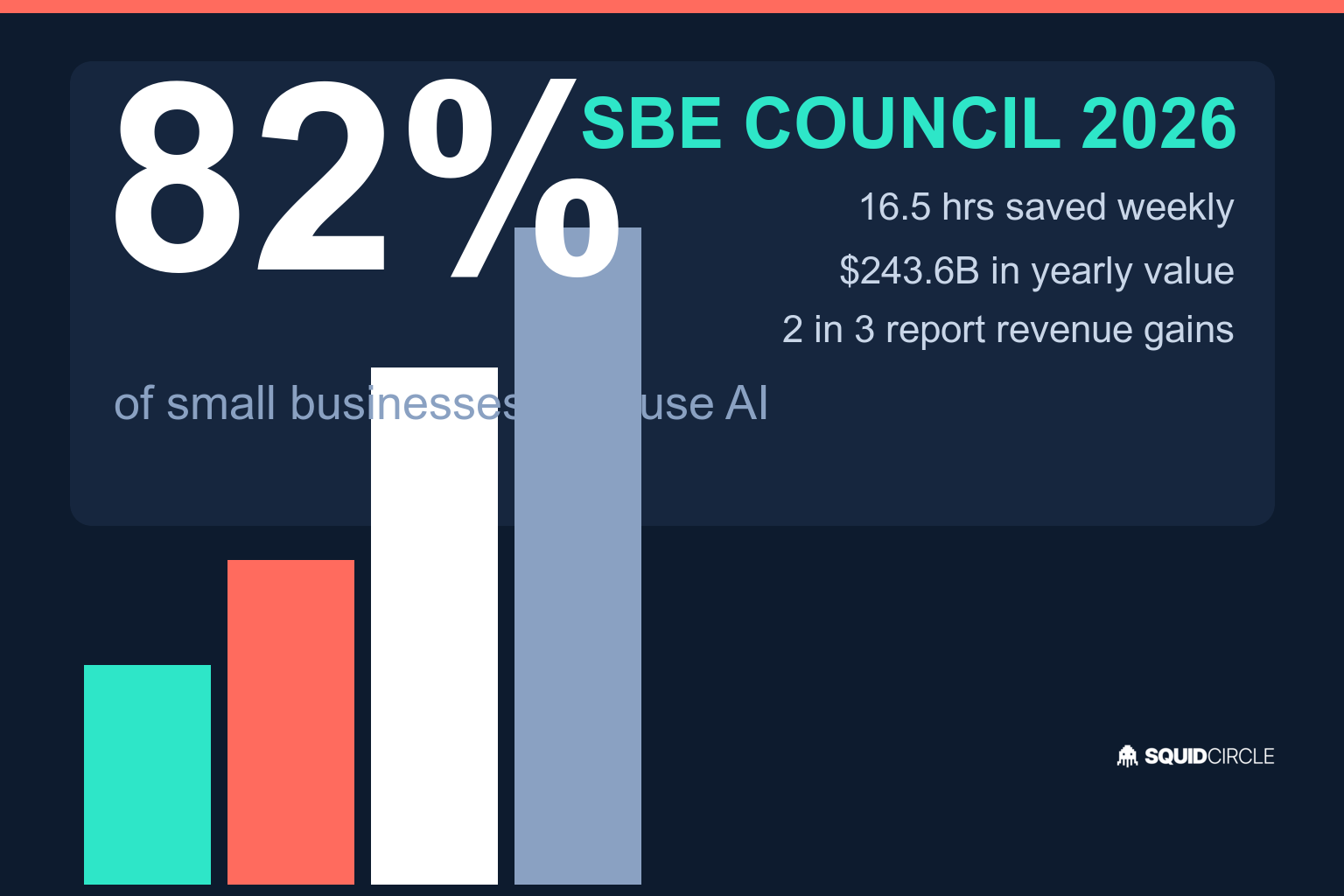
For three years, the small business conversation about AI was the same awkward question: should we use this stuff? The SBE Council’s 2026 Technology Use Survey just buried that question for good. Eighty-two percent of small employers now use at least one AI tool. The question isn’t whether anymore. It’s whether you’re getting anything out of it.
That’s a bigger shift than the headline suggests. When adoption crosses 80%, AI stops being a competitive edge and becomes table stakes — like email, like a website. The advantage moves to the small minority who use it well.
What the Survey Actually Found
The SBE Council’s numbers, published November 10, are worth reading slowly because they quantify something we see every day building AI systems for small businesses:
- 82% of small employers have adopted at least one AI tool
- Two-thirds report revenue gains directly tied to AI
- Owners save a median of 5 hours a week; their employees save another 11.5
- That time is worth an estimated $243.6 billion a year across the US small business economy
- 93% plan to keep investing in AI
Sixteen and a half hours per person, per week. That’s two full workdays. If a consultant promised you that, you’d ask what it costs. The survey says most small businesses are getting it for the price of a few subscriptions — and most of them still feel like they’re behind.
The Gap the Headlines Miss
Here’s the part that matters for your strategy: adopting an AI tool and integrating AI into your business are very different things. Goldman Sachs found the same pattern in its 10,000 Small Businesses data — over 85% of graduates use AI in some form, but only about 15% have fully integrated it into core operations.
That gap is where the real returns hide. A chat subscription that drafts the occasional email saves minutes. An agent that watches your inbox, qualifies leads, books appointments, and updates your CRM while you sleep saves the kind of time the SBE survey is measuring. The two-thirds reporting revenue gains? They’re the ones past the chatbot stage.
We ran into this exact wall with a client recently: three AI subscriptions, zero hours saved, because nothing connected to anything. The fix wasn’t another tool — it was wiring the tools they had into their actual workflow.
Where the Hours Actually Come From
Based on what we’ve implemented with small businesses, the 5+ hours show up in predictable places:
- Inbox and lead response. First-response time drops from hours to seconds. This is the single biggest time win we see.
- Content and follow-up. Drafting, scheduling, and follow-up sequences for marketing that used to eat Friday afternoons.
- Admin and scheduling. Booking, reminders, and no-show recovery running without a human in the loop.
- Financial analysis and planning. Goldman’s survey found 42% of owners now use AI here — more than double the 2024 rate.
Notice none of these are “write me a blog post.” The savings come from repetitive, rule-shaped work — the stuff you’d delegate if you could afford to hire for it.
What To Do With This
Three practical moves if you’re in the 82% but not feeling the two workdays:
- Audit your subscriptions honestly. List every AI tool you pay for and the last time it saved you real time. Cancel the rest.
- Pick one workflow, not one tool. Lead response is almost always the right first target — it has a clear metric (response time, booked calls) and clear dollar value.
- Get found where decisions are made. With most of your market now using AI tools, being visible inside them matters. If you haven’t yet, claim your business in ChatGPT — it’s free and takes minutes.
The SBE Council’s other finding — that policymakers need one national AI playbook instead of fifty — is a real concern, but it’s not your problem this quarter. Your problem is that competitors who figure out integration first get the revenue gains the other third is missing.
The Bottom Line
Eighty-two percent adoption means your customers, your competitors, and probably your accountant are all using AI. The survey’s $243.6 billion figure isn’t a forecast — it’s already being collected, unevenly, by whoever wired AI into their workflow first. The window where “we use AI” meant anything is closing. What counts now is what your AI actually does.
Ready to close the integration gap? SQUIDBOT builds AI agents that handle lead response, follow-up, and scheduling for your business — the exact workflows where those 16.5 weekly hours are hiding. See what it can take off your plate →