
Claude Haiku 5.5: Small Business High-Volume AI Gets Dirt Cheap
Anthropic quietly changed the economics of AI automation for small businesses this week. On October 7, it shipped Claude Haiku 5.5 — its smallest, fastest model — at $0.10 per million input tokens and $0.50 per million output tokens. That’s a tenth of what Haiku 4.5 cost, and Anthropic puts the average saving at around 75% per piece of work once you account for the new tokenizer.
If you’re a small business running AI on volume — sorting leads, summarizing calls, triaging inboxes, tagging support tickets — this is the release that makes “AI for everything” actually affordable.
The pricing, in plain numbers
Here’s the breakdown per million tokens (for prompts under 100K tokens):
- Input: $0.10 (was $1.00 on Haiku 4.5)
- Output: $0.50 (was $5.00)
- Cache reads: $0.01 (was $0.10)
- Cache writes: $0.125 (was $1.25)
One catch worth knowing: past 100K tokens of prompt, every rate jumps 5x ($0.50 in / $2.50 out). For most small-business batch jobs — classify this email, summarize this call, score this lead — you’ll never come close to that ceiling. Haiku 5.5 also carries a full 1M-token context window and supports up to 128K output tokens, so even long documents fit under the cheap tier.
Anthropic also announced two side benefits in the same launch: Sonnet 5.5’s cache-read price was halved (making agentic work roughly 20% cheaper on that model), and Claude Max and Team subscribers now get a monthly API credit to build agents on the Claude Platform.
Why cheap-and-fast matters more than smart
The AI headlines obsess over frontier intelligence — which model wins the benchmark wars this week. But for the work most small businesses actually automate, the bottleneck was never intelligence. It was cost at volume.
Think about the jobs where AI pays for itself:
- Lead triage. Read every inbound inquiry, score it, route it, draft a reply. Thousands of times a month.
- Call summaries. Transcribe and summarize every customer call the same day, automatically.
- Review responses. Draft a personal-sounding reply to every Google review, good or bad.
- Inbox sorting. Classify and label every email so nothing from a customer slips through.
None of these need a frontier model. They need a model that’s good enough, fast, and cheap enough that you never think about the meter. That’s exactly the slot Haiku 5.5 is built for — Anthropic pitches it for “summaries, classification and compaction,” and positions it as the subagent that handles small tasks while bigger models do heavy lifting.
At $0.10/$0.50 per million tokens, you could process roughly a million words of input for a dime. Your entire month of customer emails costs less than a coffee.
It’s not just cheap — it’s capable
This isn’t a stripped-down bargain model. Haiku 5.5 is the first Haiku-class model with an adjustable effort setting, so you can trade cost against intelligence per task. It posts stronger results than Haiku 4.5 in coding, computer use (OSWorld), and knowledge work (GDPval), and it accepts text and image input — useful if your pipeline reads screenshots, scanned invoices, or product photos.
It’s available now on the Claude API, Amazon Bedrock, Google Cloud Vertex AI, Microsoft Foundry, and Claude Platform on AWS. That multi-cloud availability matters for small businesses: you’re not locked into one vendor’s ecosystem to get the cheap rates.
How this fits the broader price war
Haiku 5.5 lands in the middle of an AI price war we’ve covered before — Opus 5.5 cut typical workloads 40% versus Opus 5, and GPT-6 Sol pushed prices down across the board. The pattern is now unmistakable: the frontier models are dropping in price modestly, but the small models are collapsing in price dramatically.
That collapse is what unlocks the next wave of small-business automation. A year ago, running an AI workflow across every lead, call, and email was a line item you had to justify. Today it’s rounding error. The businesses that win won’t be the ones with the smartest AI — they’ll be the ones that wire cheap AI into every repetitive corner of their operations first.
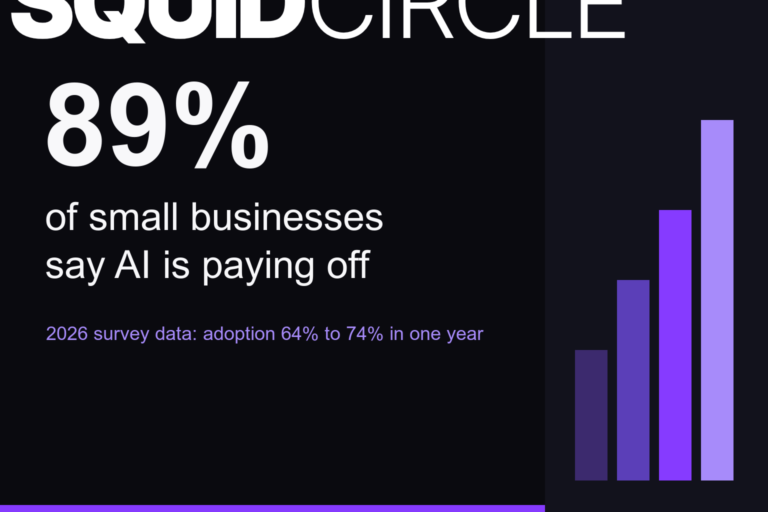
If you want a sense of how fast adoption is moving, small businesses are already all-in: recent survey data shows 89% say AI is finally paying off.
What to do with it this week
Three practical moves, no developer required to start thinking about them:
- Audit your repetitive text work. List every task where someone reads something and decides something — emails, reviews, form submissions, call notes. Each one is a candidate for a Haiku-class model.
- Start with one high-volume, low-risk job. Lead sorting or review responses are ideal: high frequency, easy to check, and mistakes are cheap to catch.
- Pair it with a bigger model only when needed. Use the cheap model for volume and escalate the tricky 5% to a frontier model. That’s the exact fan-out pattern Anthropic designed the 5.5 family for.
The bottom line
Claude Haiku 5.5 removes the last real excuse for not automating high-volume busywork: cost. The model is fast, good enough for classification and summarization work, and priced so low the meter barely moves. If you’ve been waiting for AI automation to get cheap enough to just do — this is that moment.
Want help wiring AI into your lead handling, call summaries, or customer follow-up? That’s exactly what we build at SquidCircle. See how at squidcircle.com/squidbot.