OpenAI’s GPT-Live Changes Voice AI Forever
Voice AI has been the most frustrating kind of almost. For years, you’d call a business, get a robot, and immediately say “representative” because the thing on the other end couldn’t handle a single interruption, a conversational detour, or the basic human habit of changing your mind mid-sentence.
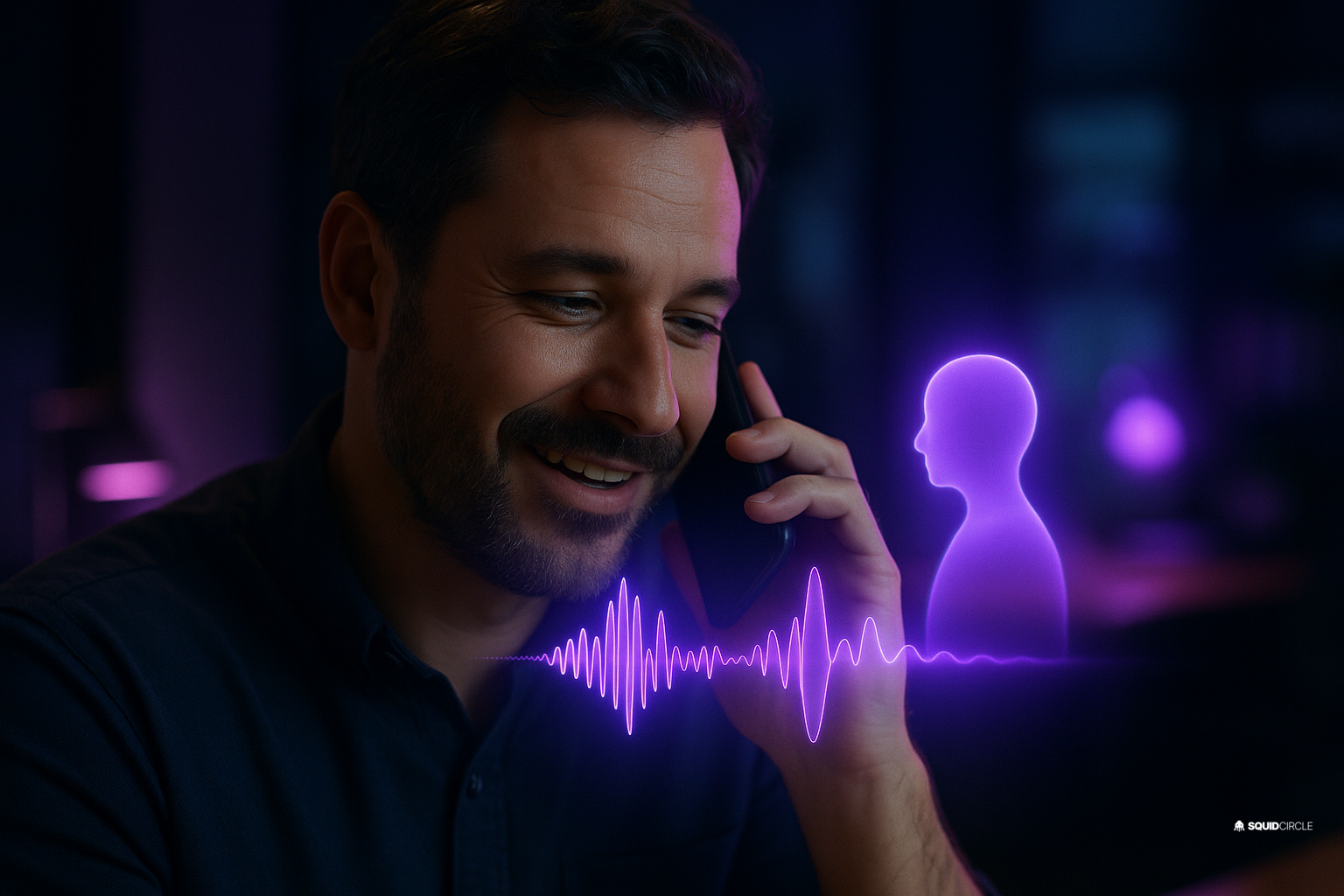
That just changed. OpenAI announced GPT-Live, a full-duplex voice model that can listen and speak at the same time. It says “mhmm,” “yeah,” and “got it” while you’re still talking. It handles interruptions naturally. It pauses when you pause. And behind the scenes, it delegates complex reasoning to GPT-5.5 — essentially running a second brain while maintaining a conversation.
If you’re a small business owner, this is not another incremental AI update. This is the moment voice AI goes from “tolerable” to “indistinguishable from a great employee.”
What GPT-Live Actually Does
Previous voice AI models worked in a rigid turn-based format. You talk. It waits. You stop. It processes. It responds. Every interaction felt like leaving a voicemail and waiting for a callback.
GPT-Live is full-duplex, meaning it processes audio in both directions simultaneously — just like a real phone conversation.
Here’s what that looks like in practice:
- Real-time backchanneling: It says “mhmm,” “right,” or “yeah” while you’re speaking, so you know it’s listening.
- Natural interruption handling: Start talking over it, and it stops. Pivot to a new topic mid-sentence, and it follows.
- Conversational memory within the call: Refer back to something you said two minutes ago without restarting.
- Background delegation: When you ask something complex — “What’s my appointment availability next Thursday?” — GPT-Live maintains the conversation flow while GPT-5.5 handles the reasoning in the background.
This is the difference between an automated phone menu and a conversation.
Why This Matters for Small Businesses
Here’s the scenario every small business owner knows too well: the phone rings while you’re with a customer. You let it go to voicemail. The caller doesn’t leave a message. You’ve lost a lead.
Existing AI phone agents tried to solve this, but they’ve been clunky. Customers could tell they were talking to a robot within 10 seconds. The stilted pacing, the awkward pauses, the inability to handle “Wait, actually, can I change that to 3pm instead?” — it all broke the illusion.
GPT-Live removes every one of those friction points.
The AI Receptionist That Actually Sounds Human
Imagine a receptionist that:
- Answers every call within one ring, 24/7
- Says “Sure, let me check that for you” while actually checking
- Handles back-and-forth scheduling without putting anyone on hold
- Transfers complex questions to GPT-5.5 mid-conversation without missing a beat
- Never has a bad day, never calls in sick, never misses a lead
That’s not a future scenario. The building blocks are available right now, and GPT-Live makes the experience seamless.
The Delegation Pattern: How GPT-Live Mirrors How Smart Businesses Work
One of the most underappreciated details in the GPT-Live announcement is the background delegation to GPT-5.5. The voice model handles the conversation while a more powerful reasoning model does the heavy lifting behind the scenes.
If that sounds familiar, it’s because it’s exactly how SquidBot operates. A front-line agent handles the interaction — answering the phone, responding to a lead, booking an appointment — while specialist agents handle the complex work in the background. One agent talks. The others think.
This delegation pattern is the future of business operations: not one AI that does everything, but a coordinated team where each member has a specific role.
The Practical Impact: What Changes This Week
GPT-Live is rolling out now to all ChatGPT users. Free users get GPT-Live mini (lighter model, still full-duplex). Plus and Pro users get the full version. API access is coming soon, which means third-party tools — including voice agents, phone systems, and customer service platforms — will be able to build on top of it.
Here’s what small businesses should pay attention to:
- Customer experience: The gap between “talking to AI” and “talking to a person” just narrowed dramatically. Customers who previously hung up on AI phone systems may not even realize they’re talking to one.
- Lead response time: Every call gets answered instantly. No more lost leads from missed calls during business hours.
- Cost structure: A voice AI agent costs a fraction of a full-time receptionist — and works nights, weekends, and holidays without overtime.
- Integration potential: When the API launches, GPT-Live can connect to your CRM, calendar, and booking systems. It’s not just answering calls — it’s taking action on them.
Meanwhile: xAI’s Grok Voice Is Already in Production
While OpenAI’s GPT-Live is rolling out to consumers, xAI isn’t standing still. Their Grok Voice Think Fast 1.0 model — built in collaboration with Starlink for real-world deployment — is already running production voice agents at scale.
Here’s what makes Grok Voice different from the consumer voice AI you’ve tried:
- Built for messy real-world conversations — interruptions, accents, changing minds mid-sentence, ambiguous requests. Grok Voice handles all of it without breaking.
- Background reasoning without latency hits — same architectural pattern as GPT-Live. The model thinks through complex queries in the background while keeping the conversation flowing naturally.
- Voice Agent Builder — xAI launched a no-code platform where you can configure a production voice agent in under two minutes. Write a plain-language description of how calls should flow, attach your tools and documents, and deploy.
- 21 new flagship voices plus voice cloning from ~2 minutes of audio — your AI agent can sound like your brand, not a generic robot.
- #1 on the tau-voice Bench leaderboard for telecom-grade voice agent performance.
The takeaway? This isn’t a two-horse race. OpenAI is pushing the consumer experience forward. xAI is pushing the enterprise and developer side. And for small businesses, that competition means voice AI gets better, cheaper, and more accessible — fast.
The Bigger Picture: Voice Is Just the Beginning
GPT-Live represents something bigger than better phone calls. It’s proof that AI is crossing the naturalness threshold — the point where interacting with AI feels as comfortable as interacting with a person.
For small businesses, this changes the math on AI adoption. The old objection was “customers will hate talking to a robot.” That objection is losing its foundation. And the businesses that move first — that deploy AI voice agents while their competitors are still sending calls to voicemail — will capture the leads that everyone else is missing.
This is exactly why we built SquidBot as a full business operations platform, not just a chatbot. Voice, text, email, scheduling — they’re all touchpoints where AI can now operate at a level your customers won’t just tolerate, they’ll prefer.
What to Do Right Now
- Try GPT-Live yourself. Open ChatGPT’s voice mode and have a real conversation. Notice how it feels different from every voice assistant you’ve used before.
- Audit your phone handling. How many calls go to voicemail each week? How many of those callers never call back?
- Watch for the API. When it drops, the tools you already use will integrate it. Be ready to test.
The businesses that win the next decade won’t be the ones with the biggest teams. They’ll be the ones that deploy AI where it matters — answering every call, capturing every lead, and never letting a customer wait.
Ready to run your business on AI? SquidBot deploys AI agents for voice, lead intake, scheduling, and customer engagement — 24/7, no salary required. Book a demo and see it live.