How We Built a 7-Step AI Landing Page Generator That Deploys in 60 Seconds
For small business owners, launching a new marketing campaign has always been a bottleneck. Between drafting compelling copy, sourcing high-quality assets, writing the code, and deploying it to a live server, launching even a single landing page can take days—if not weeks—and cost thousands of dollars. It is a slow, manual friction point that stalls growth.
At SquidCircle, we believe that AI should do more than just draft emails or answer basic customer support questions. True AI business automation means automating entire business workflows. That is why we built and deployed the landing-page-builder skill within our OpenClaw framework—a system that automates the entire landing page creation process, from offer concept to live deployment, in exactly seven steps and under 60 seconds.
Here is a behind-the-scenes look at how we implemented this automated pipeline and how we are using AI agents for business to completely redefine speed-to-market for small business marketing.
The Core Tech: Upgrading Our Sales Demo
We originally built this skill to solve a specific problem in our sales process: demonstrating the immediate, tangible power of customized AI. We wanted our sales demo bot (Keith) to be able to generate a complete, custom, high-converting landing page for a prospect on the fly. By triggering a simple /landing command in Telegram or Slack, Keith coordinates a multi-agent workflow that designs, writes, and deploys a custom, industry-specific campaign.
This is not a generic template with swapped-out text. The system generates unique positioning, bespoke copywriting, and custom AI-generated graphics on the fly. Here is the exact seven-step protocol the agent executes under the hood.
Inside the 7-Step Automated Generation Pipeline
Step 1: Dynamic Offer Formulation
The first step is understanding the target audience. The agent takes the prospect’s industry (e.g., “Boise pressure washing” or “Seattle boutique clinic”) and analyzes it against seasonal trends, consumer pain points, and regional triggers. It then dynamically drafts 2-3 high-converting promotional offers. For example, for a pressure washing company in July, it might formulate a “Summer Driveway Refresh & Free Gutter Flush” package.
Step 2: Conversion-Optimized Copywriting
Once the offer is locked in, the copywriting sub-agent takes over. It writes complete page copy following direct-response marketing frameworks: an attention-grabbing hero headline, a persuasive sub-headline, bullet points listing benefits (not just features), scarcity indicators, and strong Call-to-Action (CTA) buttons. No lorem ipsum—every word is tailored to sell the specific offer.
Step 3: High-Definition Hero Image Generation
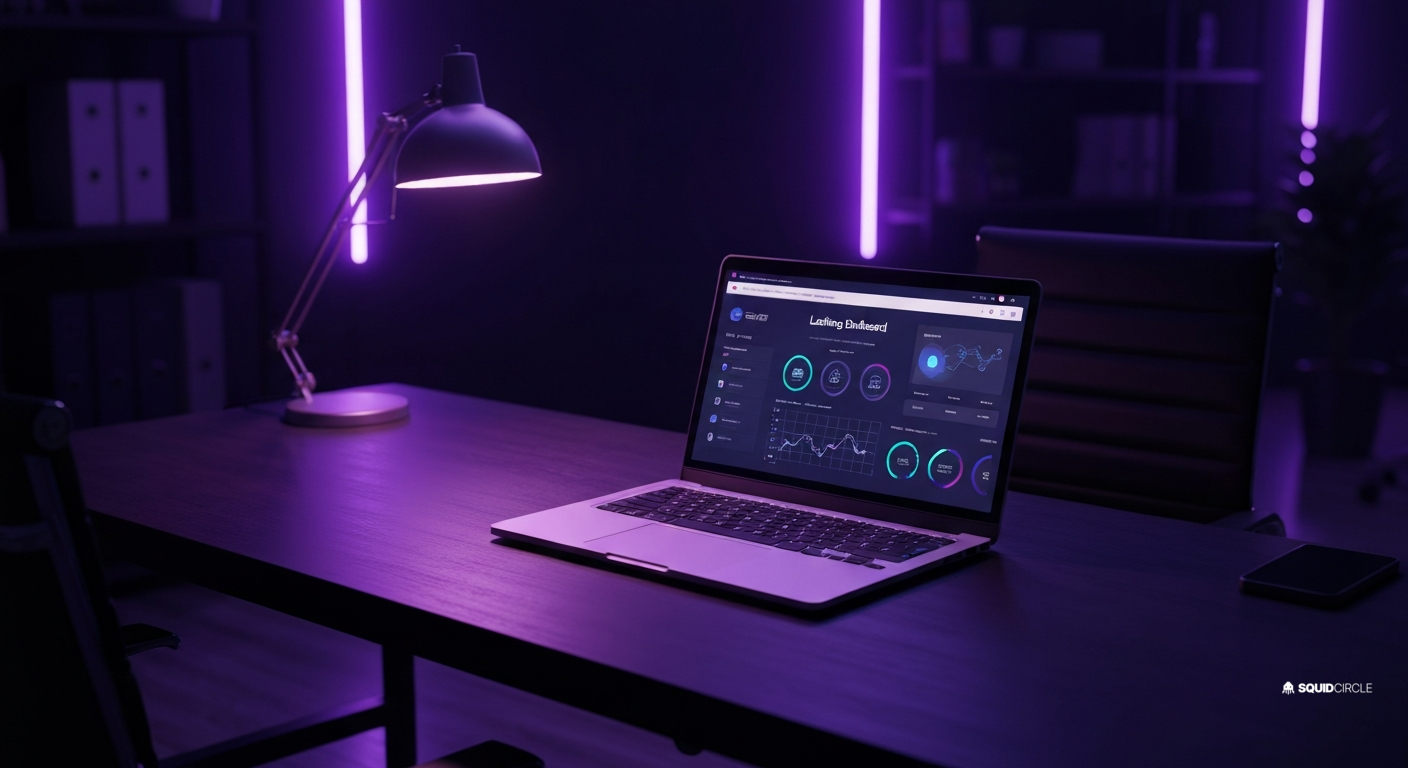
To give the page a professional editorial look, the agent triggers a custom image generation pipeline. Using advanced prompt engineering—including specific brand styling parameters like dark backgrounds, soft neon purple glowing accents, and clean modern styling—the agent generates a high-definition, photorealistic hero image that visually represents the specific service. No cheesy stock photos, and no abstract AI art clichés.
Step 4: Tailored Brand Integration
A great landing page must look like it belongs to the business. The agent reads the brand’s visual identity parameters—including primary and secondary hex colors, typography scale, button styles, and design fingerprint. It then maps these assets directly onto the page’s styling sheet, ensuring the colors and fonts match the existing brand perfectly.
Step 5: Semantic HTML and Tailwind CSS Assembly
With copy, assets, and brand styling finalized, the code generation sub-agent compiles the raw elements into clean, modern, responsive HTML and Tailwind CSS. The output is highly structured, semantic, mobile-first, and lightweight, ensuring rapid load times and perfect rendering across all devices.
Step 6: Automated Simulated Deployment
Once the code is assembled, the agent deploys the finished static file live to our demo server. It assigns a unique company-based slug and hosts the page at a simulated live URL (e.g., demo.squidbot.app/landing/[slug]), making it immediately accessible on any browser worldwide.
Step 7: Instant Notification and Delivery
Finally, the agent returns the completed URL to the user, accompanied by a clean summary of the strategy behind the campaign. Within 60 seconds of typing a single command, the business owner has a fully functional, custom-branded marketing asset live and ready to capture leads.
Why Skills are the Key to Scaling AI for Small Business
In early iterations of our software, we tried to handle landing page building through single, massive system prompts. The results were inconsistent—the code would break, the styling would ignore brand rules, or the copy would sound generic. To solve this, we pivoted to a modular, “skill-based” architecture using the OpenClaw framework.
A “skill” in OpenClaw is a highly structured markdown package that teaches an agent how to coordinate multiple specialized tools. By splitting the task of landing page building into distinct sub-tasks (copywriting, visual design, code generation, and deployment), we can use specialized models for each task and run automated validation checks at every step. If the code generator outputs invalid HTML, the system catches it, self-heals, and regenerates before deployment.
This ties directly into our core mission of building seamless, end-to-end operational systems, such as our zero-touch client onboarding and intake system. By automating the technical complexity, we empower owner-operators to deploy sophisticated systems without requiring a full-time engineering or marketing team.
Unlocking True Operational Efficiency
When you look at the landscape of AI for small business, it is easy to get overwhelmed by the sheer number of standalone tools. But tools alone do not save time—they often create extra work. True efficiency is unlocked when AI transitions from a tool you write prompts for, to an autonomous operator running entire business functions.
The landing-page-builder is just one example of what is possible. By moving the technical burden of coding, copywriting, and deployment over to autonomous agents, small businesses can run highly sophisticated campaigns on demand. The future of small business marketing is not manual—it is immediate, dynamic, and automated.
Want to see our automated agent fleet in action? Contact us to schedule a custom demo and see a tailored landing page built for your business live in under 60 seconds.