Deploying AI Reengagement Agents Live on an Onboarding Call
The Shift from Theory to Tangible: Why Traditional Onboarding Fails
For years, the standard onboarding process for implementing AI agents for business has followed a slow, exhausting script. A small business owner signs an agreement, schedules a series of long-winded consulting calls, and then waits weeks for a technical team to configure, integrate, and deploy their new virtual workforce. By the time the systems are actually live, the initial excitement has cooled, momentum is lost, and the business has yet to see a single dollar of return on its investment.
We decided that was a broken model. Small business owners do not need more consulting; they need immediate, tangible results. They need small business AI tools that work from day one, proving their value before the first monthly subscription invoice even arrives.
Yesterday, during a live two-hour onboarding session with Chris Szydlowski of Canada West Segway (operating River Valley Adventures), we put our new onboarding playbook to the test. Instead of laying out a four-week theoretical roadmap, we designed, seasoned, and deployed a custom AI Customer Reengagement Agent live on the call. Before Chris hung up, he watched a real-time test-send land in his own inbox, specialized with his brand voice, guidelines, and native parameters. We call this process “Live Seasoning,” and it is completely changing how we automate small business operations.
The 7-Part Agent Planning Blueprint: Structuring the Brain Melt
The core of our rapid-onboarding framework is what we call the “Brain Melt” session. In under two hours, we extract the critical DNA of a business and inject it directly into our agent architectures. To make this process highly structured and repeatable, we use our proprietary 7-part Agent Planning Blueprint to design the agent’s scope in real-time:
- 1. Identity: Establishing who the agent is. For Chris, this meant defining the personality, name, and visual presence (using custom emojis) of his Customer Reengagement Agent, ensuring it acts like a natural extension of his internal staff.
- 2. Goals: Pinpointing the exact, measurable outcomes the agent is tasked to achieve (e.g., reactivating old leads and securing booking confirmations).
- 3. Knowledge: Feeding the agent the business’s specific services, pricing guides, FAQs, and words to avoid.
- 4. Skills: Defining the native integrations and tools the agent has access to, such as GHL/SquidCRM messaging APIs.
- 5. Boundaries: Setting strict guardrails (e.g., never offering promotional discounts or modifying billing terms unless explicitly approved).
- 6. Telemetry: Mapping out exactly how the agent reports its metrics back to the business owners (such as weekly automated PDF summaries).
- 7. Rules: Defining non-negotiable operational guidelines, such as daily send caps to preserve email sender reputation.
By using this structured blueprint live on the call, we eliminated the typical back-and-forth email chains that drag onboarding out for weeks. We did not ask Chris to write a detailed brand manual. Instead, we interviewed him, extracted the parameters, and specialized the agent live on the screen.
Why a Reengagement Agent is the Perfect “Day 1” Play
When implementing AI business automation, many owners want to start with complex, customer-facing agents like live receptionists or automated phone bookers. While those are incredibly valuable, they are high-risk “Day 1” plays. They interact directly with active, hot traffic where any system misconfiguration can result in immediate friction.
A Customer Reengagement Agent, on the other hand, is the ultimate low-risk, high-return entry point. It targets dormant contacts—leads who showed interest months ago but never booked, or past clients who haven’t returned in over a year. By targeting this silent, underutilized database, the agent can unlock immediate hidden revenue without risking active customer relationships. It is the exact strategy we detailed in our case study on scanning 2,093 dormant CRM contacts for hidden revenue, which revealed how much money small businesses leave on the table by ignoring their existing lists.
By focusing the onboarding call entirely on reactivating this dormant list, the client sees a clear path to immediate ROI. If the agent reactivates just two or three high-value accounts in its first week, the entire build cost of the AI system is immediately covered.
Technical Deep-Dive: Powered by GHL V2 APIs
To make “Live Seasoning” work seamlessly without manual coding bottlenecks, we upgraded our integration suite to leverage the newly confirmed GoHighLevel (GHL) V2 APIs. This allows our agents to act autonomously within a structured, native environment. Here is the technical breakdown of how the Reengagement Agent operates:
1. GHL V2 Statistics API
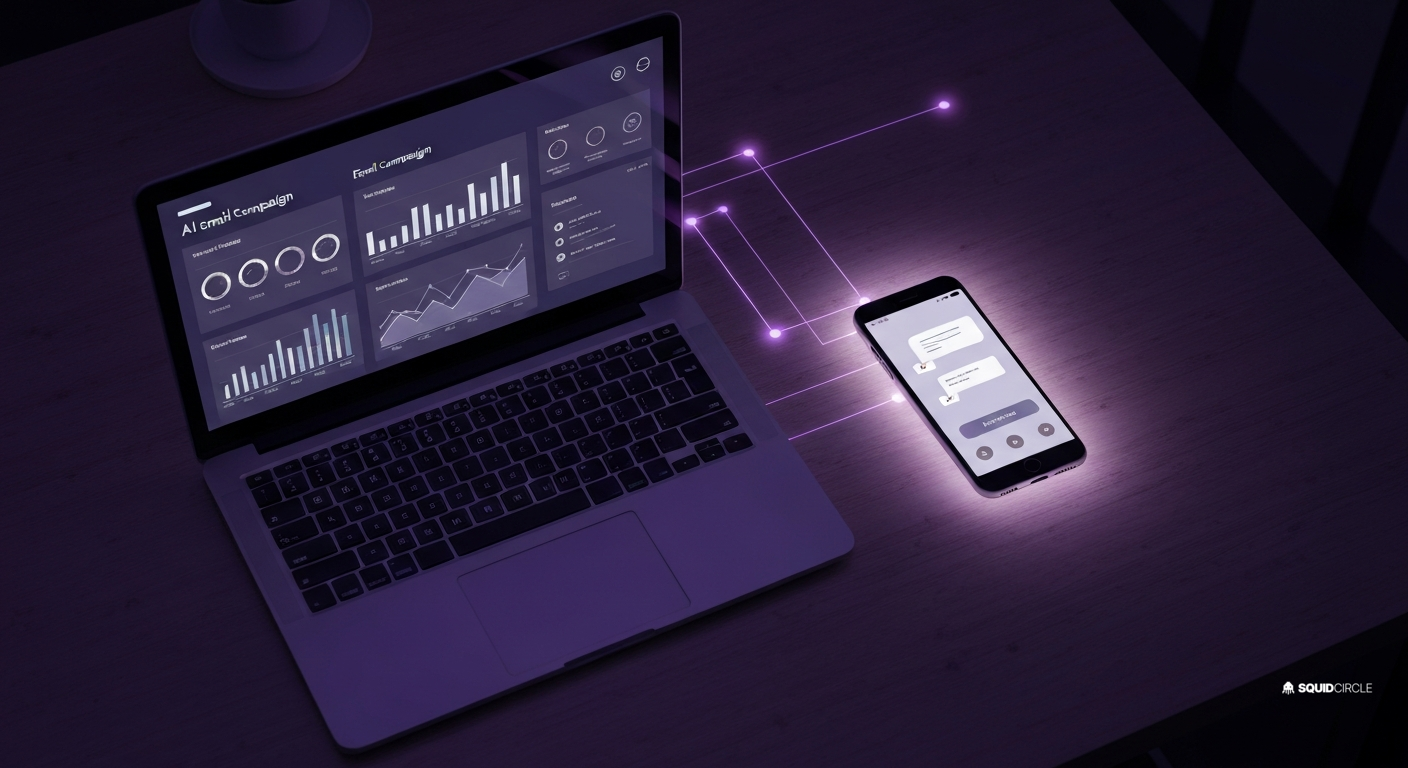
Instead of sending campaigns blindly, the agent monitors performance in real-time. By hitting the public campaign stats endpoint, the agent tracks open rates, click-through rates, reply rates, and bounce rates across every email variant:
GET /emails/public/v2/locations/{locationId}/campaigns/stats/{source}/{sourceId}If an email variant falls below an approved performance threshold, the agent flags it and prepares an alternative draft for review.
2. GHL V2 Templates API
To optimize messaging without human intervention, the agent uses the templates API to create and modify drafts. The agent is strictly instructed to never modify a running template in-place; instead, it clones the template, writes the optimized copy, and saves it as a new version to ensure full historical tracking:
POST /emails/public/v2/locations/{locationId}/templates
PATCH /emails/public/v2/locations/{locationId}/templates/{templateId}
3. Native A/B Testing & Tag Enrollment
The agent sets up native GHL A/B testing with up to six variants, allowing the CRM’s native systems to automatically route traffic to the winning copy. Enrollment is entirely tag-based. The agent applies specific, localized tags to contacts in GHL, which triggers native workflows to initiate the campaign, ensuring complete alignment between our AI layer and the client’s existing CRM setups.
4. Sender Reputation Guardrails
To prevent deliverability issues, the agent is configured with a strict 500-send weekly SMTP cap. The agent tracks its weekly metrics autonomously, pausing its outreach when the threshold is met, ensuring the client’s domain remains pristine.
The 30-Day Launch Roadmap
Deploying an AI agent live on a call is just the beginning. To ensure long-term success, we wrap the live seasoning into a structured 30-day deployment roadmap that guides the business from its first test-send to full automated operations:
Week 1: Live Seasoning & Test-Send. During the initial “Brain Melt” session, the first agent is seasoned live on the call, and a test-send is successfully delivered to the client’s own inbox to verify voice and formatting accuracy.
Week 2: CRM Sync & Active Launch. The client’s CRM is fully populated and cleaned. The Reengagement Agent goes live, initiating its first targeted outreach sequence to the dormant database under strict SMTP caps.
Week 3: Second Agent Seasoning. With the first agent running successfully and generating metrics, we hold a second short session to season and deploy the next agent in the roadmap—such as an AI booking assistant or an inbound lead triager, following our guide on building zero-touch intake systems.
Week 4: 30-Day Performance Review. We analyze the native GHL stats, review the automated weekly reports, and fine-tune the agent’s prompts and A/B variants based on real market feedback, cementing a highly profitable growth loop.
Immediate Value Over Long-Term Promises
The old era of business automation was built on long timelines and vague promises. By transforming onboarding into a live, collaborative working session, we are proving that AI can deliver value on day one. When a small business owner leaves a call knowing their custom agent is already built, tested, and ready to launch, trust is earned, risk is eliminated, and momentum is unlocked.
If you are ready to stop talking about AI and start seeing it run your operations, it is time to build your first agent. Let’s melt some brains and get your AI workforce live.