
AI Agents for Owner-Operated Businesses: How Solo Entrepreneurs Can Run a Full Team Without Hiring
If you run a business by yourself — or with just a handful of people — you already know the squeeze. Every hour you spend on scheduling, follow-ups, CRM cleanup, or review requests is an hour you are not doing the work that actually makes money. The traditional solution was “hire someone.” But hiring is expensive, slow, and comes with its own management overhead.
That is where AI agents for owner-operated businesses change the math entirely.
AI agents are not chatbots that answer questions. They are autonomous digital workers that take over complete business functions: answering calls, sending follow-ups, cleaning CRM data, requesting reviews, managing your calendar, and more. For the solo operator or the micro-team, they are the first realistic alternative to hiring a human for every back-office task.
Quick Summary
- Problem: Owner-operated businesses spend 30–40% of their time on administrative tasks instead of revenue-generating work.
- Solution: AI agents automate entire business functions — CRM, scheduling, follow-up, reviews, intake — so one person operates like a ten-person team.
- What you get: 24/7 availability, no hiring overhead, consistent customer experience, and time back to focus on your actual craft.
- How it works: Deploy specialized agents for each function, connect them to your existing tools, and let them run autonomously on your schedule.
What Are AI Agents — Really?
An AI agent is a software system that can perceive its environment, make decisions, and take actions to achieve a specific goal. Unlike a simple automation tool that runs the same script every time, an AI agent can adapt. It reads incoming emails, decides whether a response is needed, drafts it, and sends it. It monitors your CRM for stale leads and nudges them. It answers a phone call, understands the caller’s intent, and books an appointment.
For an owner-operator, this is transformative because each agent replaces an entire job function — not just a single task. The difference between a chatbot and an AI agent is the difference between a vending machine and a line cook. One dispenses a fixed item; the other prepares a meal based on what you ask for.
The Four Business Functions Every Owner-Operator Should Automate First
1. Lead Capture and Follow-Up
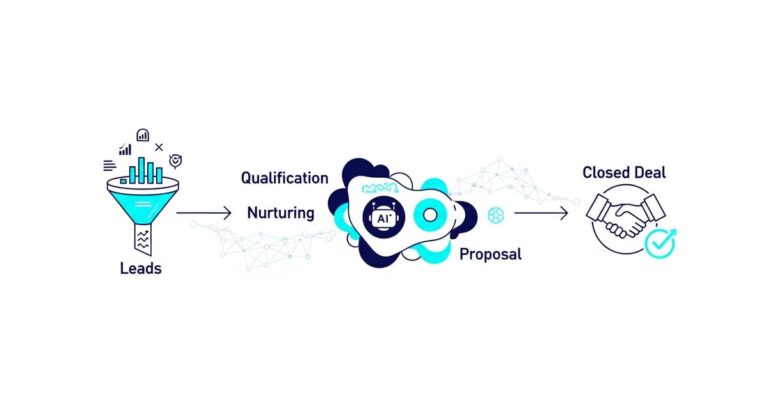
The number-one complaint from solo business owners is that leads fall through the cracks. A prospect fills out a contact form, and three days later they have already hired someone else. AI follow-up automation solves this by responding within seconds, not hours. An agent sends a personalized reply, qualifies the lead, books a call or appointment, and checks back in if the prospect goes quiet.
Real-world result: A solo HVAC technician using AI follow-up agents saw a 35% increase in booked calls within the first month. The agent handled every web form submission and text inquiry — while the technician was in the field fixing units.
2. Appointment Scheduling and Calendar Management
Back-and-forth emails to find a meeting time are a massive time drain. An AI scheduling agent syncs with your calendar, shares available slots, books appointments, sends reminders, and handles rescheduling — all without human intervention. For service businesses, this extends to field scheduling: the agent knows which technician is near which job site and dispatches accordingly.
3. CRM Cleanup and Pipeline Management
A messy CRM is a dead CRM. Over time, duplicate contacts, outdated statuses, and abandoned leads accumulate. An AI CRM agent can scan your entire database, merge duplicates, update lead stages based on activity, flag stale entries, and even recommend which contacts need a re-engagement email. It turns your CRM from a static spreadsheet into a living sales engine.
4. Review and Referral Automation
Customer reviews drive local search rankings and social proof. But asking every customer for a review is tedious to do manually. An AI review agent sends review requests at the right moment (right after service completion), follows up once if ignored, and directs happy customers to Google or Yelp. Review and referral automation turns a manual chore into a consistent, measurable pipeline.
How to Deploy AI Agents for Your Business in 7 Days
You do not need a technical background to get started. Here is a realistic week-by-week rollout:
- Day 1: Map your biggest time sink. Document the exact workflow — who contacts you, what happens next, where the handoffs are.
- Day 2: Choose your starting agent. Start with lead follow-up or appointment scheduling — these have the fastest ROI and the lowest setup friction.
- Day 3–4: Connect your tools. Link the agent to your calendar, email, CRM, and phone system. Most platforms (including SquidBot) have pre-built integrations.
- Day 5: Train the agent. Feed it your scripts, your brand voice, your common Q&As. The more context you give it, the better it performs.
- Day 6: Test with real scenarios. Have a friend or family member simulate a lead, a customer, a cancellation. Fix anything that feels off.
- Day 7: Go live. Monitor the first week closely, then let it run.
Common Mistakes to Avoid
- Automating a broken process. If your manual workflow is chaotic, automating it makes you chaotic faster. Fix the process first.
- Too many agents at once. Deploying four agents in one week guarantees confusion. Start with one, prove it works, then add the next.
- No human oversight. AI agents are not set-it-and-forget-it forever. Check your agent logs weekly. Tweak prompts and rules as you learn what works.
- Using the wrong platform. Chatbots are not agents. Make sure you are using a system where agents can actually act (send emails, update CRM, book appointments) — not just talk.
- Failing to document your SOPs. Agents need clear instructions. If you have never written down how you handle a booking or a review request, start there.
Why Owner-Operated Businesses Win with AI Agents
Large enterprises use AI agents too, but owner-operated businesses get an outsized benefit. When you are a team of one, every hour reclaimed is a 12.5% boost to your productive week. An agent that saves you 10 hours a week effectively gives you back a full working day. Over a year, that is 52 days. No hire, no training, no payroll tax.
The owner-operators who adopt AI agents now are building a competitive advantage that will only widen. As AI agents become more capable and affordable, the gap between a solo business with agents and one without will become a chasm.
Sources
- Gartner: What Are AI Agents?
- McKinsey: The Economic Potential of Generative AI
- Harvard Business Review: How Small Businesses Are Using AI Agents
Frequently Asked Questions
How are AI agents different from regular automation tools?
Regular automation tools follow fixed rules: “if X happens, do Y.” AI agents use language models to understand intent, make decisions, and adapt. An automation tool sends the same email every time. An AI agent reads the incoming message, decides the right response, and crafts it on the spot.
Do I need coding skills to set up AI agents for my business?
No. Modern AI agent platforms (including SquidBot) are designed for non-technical business owners. You set up agents through a dashboard, connect your existing tools via integrations, and provide your SOPs as prompts — no code required.
How much does an AI agent cost compared to hiring?
A typical AI agent platform costs $200–$600 per month for a full suite of agents covering lead follow-up, scheduling, CRM, and reviews. Compare that to a part-time employee at $15–$25 per hour ($1,200–$2,000+ per month) plus training and management time. Agents are significantly cheaper and available 24/7.
Will an AI agent sound robotic with my customers?
Modern AI agents use large language models (the same underlying technology as ChatGPT, Claude, and Gemini) to generate natural, conversational responses. When trained on your brand voice and scripts, they sound like a friendly, competent team member — not a robot.
What happens if the AI agent makes a mistake?
Good platforms include logging and monitoring so you can review every interaction. You set boundaries (what the agent can and cannot do) and escalation rules (when to hand off to a human). Most mistakes are caught quickly in the first week of monitoring and corrected with prompt adjustments.
Your Next Step
You do not need a bigger team. You need a smarter operation. AI agents let you run your business like a fully staffed organization — without the payroll, the management overhead, or the HR headache. SquidBot gives owner-operated businesses a complete AI agent team across lead intake, booking, follow-up, CRM, and reviews. One setup, one dashboard, one monthly cost. No hiring required.
Related Resources
- AI Receptionist: How Voice Agents Answer Calls and Book Appointments 24/7
- How to Find the Best AI Model for the Job (And Why It Matters)
- Speed-to-Lead: How to Automate Inbox Triage and Instant Follow-Up with AI Agents