One Line in robots.txt Now Blocks AI Training: SMB Guide
Google, Microsoft, Anthropic, and OpenAI don’t agree on much. They’re fighting over pricing, talent, and who gets to power your business. But on October 30, all four backed the same thing: a new web standard that lets any website block AI training crawlers with a single line in robots.txt. For small business owners, that one-line change quietly settles a fight you’ve been losing — and hands you real control over your content for the first time since ChatGPT launched.
What actually changed
The robots.txt file has been the internet’s do-not-disturb sign since the 1990s. The problem: it was built for search engines, not for the dozens of AI scrapers that now roam the web. Blocking AI training meant adding a separate entry for every provider — and every scraper each provider runs. Most sites never bothered. The list went stale the moment a lab spun up a new crawler.
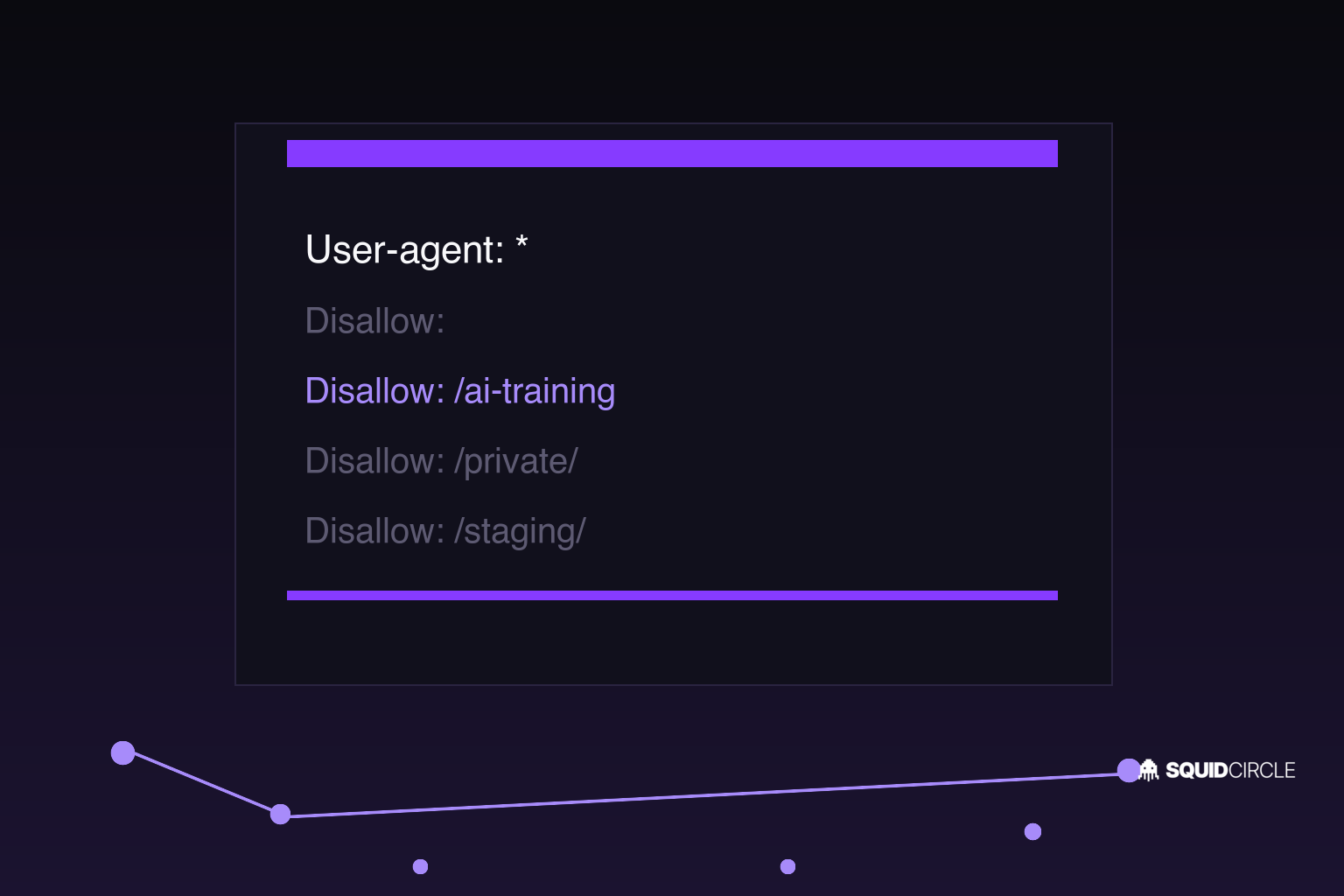
The new proposal, submitted as a draft to the Internet Engineering Task Force, folds a single AI-training opt-out into the Robots Exclusion Protocol itself. One entry blocks every generative-AI training crawler that supports the standard. Microsoft is going further with a companion setting called AI Grounding, which lets you separately control whether its services — and third-party AI tools built on Microsoft tech — can even read your pages to answer user questions, not just train on them.
Timing: OpenAI and Microsoft plan to support it within months. Google follows sometime next year. Meta says it likes the idea but hasn’t committed. So this isn’t fully live today — but the direction is locked in.
Why small businesses should care
Here’s the tension most owners haven’t had to think about yet. When ChatGPT or Gemini answers a question, it’s often summarizing someone’s website — maybe yours. If you sell a service, you want AI assistants to recommend you in their answers. That’s the new search. But you probably don’t want your original research, pricing pages, or hard-won how-to content vacuumed up as free training data for the companies competing against you.
Until now, that was an all-or-nothing mess. Blocking AI crawlers with brute force could get you dropped from AI answers entirely — invisible in the channel where more of your customers start every month. Microsoft’s split between training and grounding is the first real attempt to make that a choice instead of a coin flip.
We ran into this exact tradeoff with our own content: publish implementation write-ups that AI assistants cite and send us traffic, or lock everything down. This standard is what makes “both” possible — let AI read and cite, keep it from training.
What to do with your site
- Don’t rush to block everything. The standard isn’t live yet, and blanket blocking risks disappearing from AI answers that send real leads. Decide per outcome, not per fear.
- Sort your pages by value. Public service pages and location content: leave crawlable — that’s your AI visibility. Original research, gated expertise, member content: those are training-data candidates worth protecting.
- When support ships, update robots.txt once. One entry replaces a growing blocklist of scraper user-agents. Have whoever manages your site add it the week OpenAI and Microsoft flip it on.
- Ask the grounding question. Decide explicitly whether AI tools may cite your site in answers. For most SMBs the answer is yes — but it should be a decision, not a default.
- Watch what Google does next year. If Google ships training and grounding controls separately, the AI visibility playbook changes again. We’ll cover it when it lands.
The bigger picture
This is the AI industry conceding, in code, that your content is property. Publishers fought this fight for three years with lawsuits and paywalls. The fact that the four biggest labs blinked first — and standardized opt-out instead of fighting it — tells you where leverage actually sits. It also fits a pattern we’ve tracked all year: from Amex protecting AI-agent purchases to kill-switch rules for business agents, the guardrails around AI are being standardized fast, and small businesses keep getting real off-ramps rather than fine print.
Your move is simple: know the choice exists, and make it deliberately when the switch goes live.
The bottom line
A one-line robots.txt standard won’t trend on anyone’s feed, but it’s one of the more consequential AI announcements of the quarter for anyone who owns a website. Content in, control back out. Decide what you want AI to do with your stuff — cite it, ignore it, or never touch it — and soon you’ll be able to say so in a single line.
If you want a hand mapping which of your pages should stay AI-visible and which to lock down, that’s exactly the kind of thing we handle at SquidCircle. See how at squidcircle.com/squidbot.